
Home Couperose and redness
Facial treatments · Waterloo
Vascular laser Redness, couperose & dilated vessels
Vascular laser is a targeted treatment that removes small blood vessels visible under the skin. It is particularly effective at reducing diffuse or localised redness and evening out the complexion.
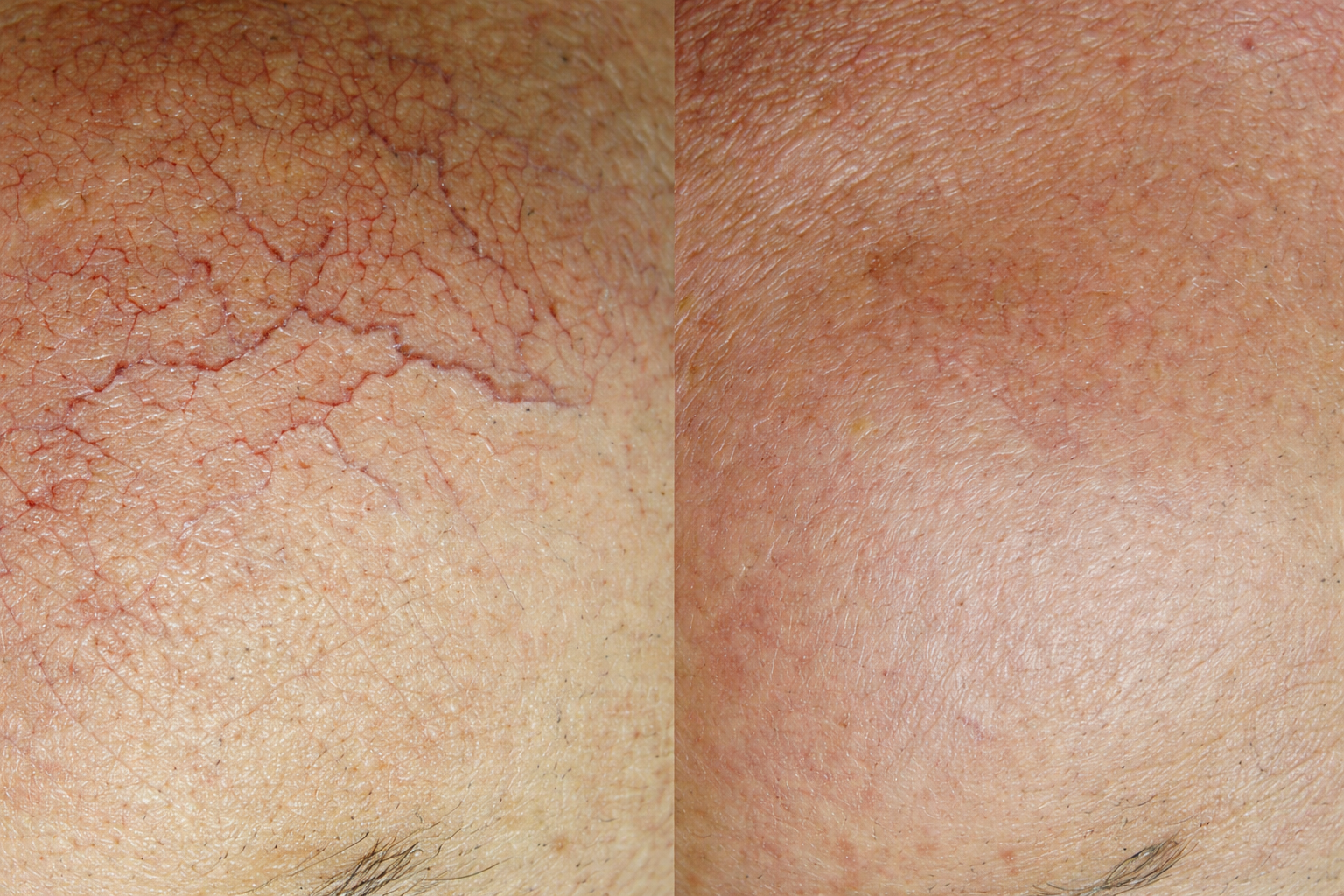
Vascular laser is commonly used to treat:
- 01
Erythrosis, a diffuse and persistent redness;
- 02
Couperose, characterised by small dilated vessels;
- 03
Erythro-couperose, combining redness and telangiectasia;
- 04
Cherry angiomas, small red or violaceous lesions;
- 05
Rosacea, a chronic condition causing redness, spots and dilated blood vessels.
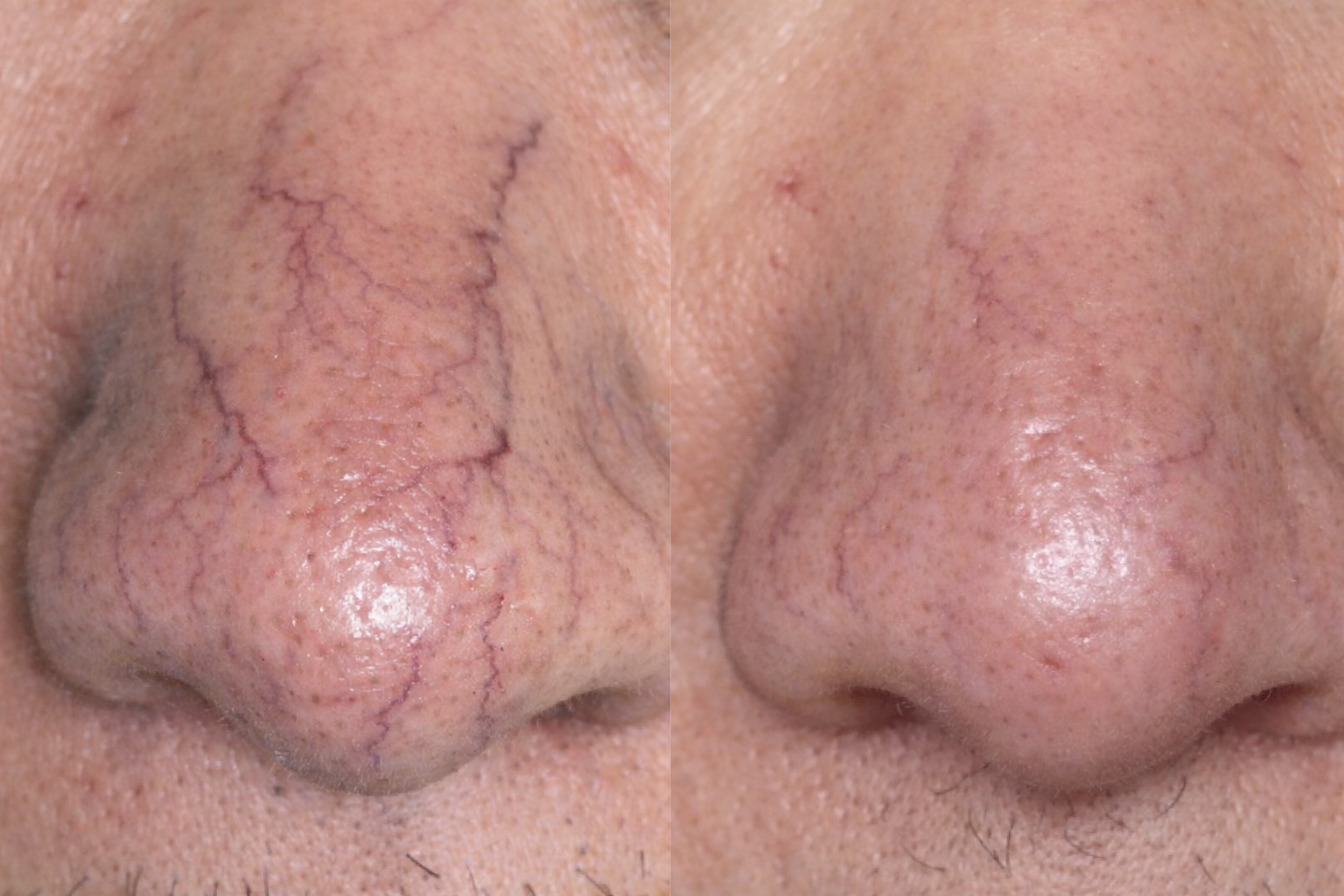
How does vascular laser work?
The principle relies on the laser’s ability to target haemoglobin in the vessels. Light energy is absorbed by this molecule, producing controlled heat. This heat weakens the vessel walls, which contract and then gradually disappear, without damaging the surrounding skin.
How many sessions are needed?
Depending on the severity of redness and the type of vessels, 1 to 3 sessions are usually enough, spaced 6 to 8 weeks apart. Most patients already see a clear improvement after the first session, but a full protocol may be needed for an optimal result.
How a session unfolds
The skin must be perfectly clean, with no make-up or cream. A gel is applied to the area to be treated to optimise light diffusion. Each laser pulse may feel like a light “elastic snap”. No anaesthetic cream can be applied, as it distorts the assessment of redness. At the end of the session, a healing cream is applied and the patient may put on make-up immediately if they wish.
Possible side effects
Downtime is generally moderate and temporary: redness, slight oedema (“mosquito bite” look), small bruises or itching. These usually disappear within a few days. Complications are very rare, but an overdose can exceptionally cause a small depressed scar.
Contraindications
Vascular laser cannot be performed in cases of:
- recent sun exposure, tanning or self-tanner;
- permanent make-up on the area to be treated;
- photosensitising medication;
- a photosensitising disease (e.g. lupus);
- pregnancy or breastfeeding.
This treatment is a very effective way to even out the complexion, reduce redness and restore calmer, clearer, more luminous skin.
How does a session unfold?
- 01
Personalised consultation
Assessment of your skin and expectations by your dermatologist to establish a tailored treatment plan
- 02
Preparation and treatment
The skin must be perfectly clean, with no make-up or cream
No anaesthetic cream can be applied, as it distorts the assessment of redness.
- 03
Results
From the 1st session.
- 04
Aftercare
Redness, slight oedema (“mosquito bite” look), small bruises or temporary itching.
Application of a healing cream after treatment.
Daily SPF 50+ sun protection is essential.
Skincare routine and make-up are allowed.
- 05
Follow-up
1 to 3 sessions are usually enough, spaced 6 to 8 weeks apart
Contact us
Book an appointment or get in touch
Our team is here to support you on your well-being journey
Contact usVisit us in the heart of Waterloo (south of Brussels)
Set in a calm, modern setting, our team of professionals welcomes you in a space dedicated to your well-being.
Book an appointmentAddress
Drève Richelle 196 – 1410 Waterloo
Hours
Monday – Saturday: 9:00 – 18:00
Sunday – Closed